
Solar Eclipse 2024 Lesson Plans: A Comprehensive Guide
Discover readily available PDF resources from NEEF and McGraw Hill, offering free lesson plans for various grade levels to enhance eclipse education!
Understanding the 2024 Eclipse Event
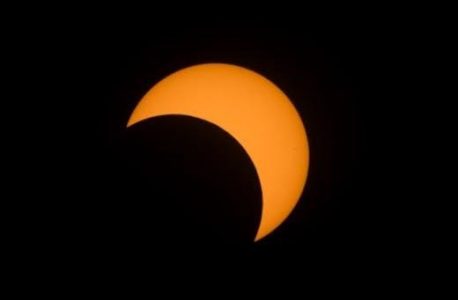
The upcoming solar eclipse on April 8, 2024, presents a unique educational opportunity for students across all grade levels. This event isn’t just an astronomical phenomenon; it’s a chance to explore science, history, and even social-emotional connections. Resources like those offered by the National Environmental Education Foundation (NEEF) provide mini-lessons focusing on eclipse basics, differentiating between solar and lunar eclipses, and understanding the sun’s corona.
Furthermore, educators can utilize free downloadable resources, including PDF documents and student handouts, to facilitate engaging classroom activities; These materials help students grasp the impact of eclipses on air temperature and regional variations in the viewing experience. Preparing students with pre-teaching materials, such as podcasts and videos, will maximize their understanding and appreciation of this spectacular event.
Path of Totality and Partial Eclipse Viewing
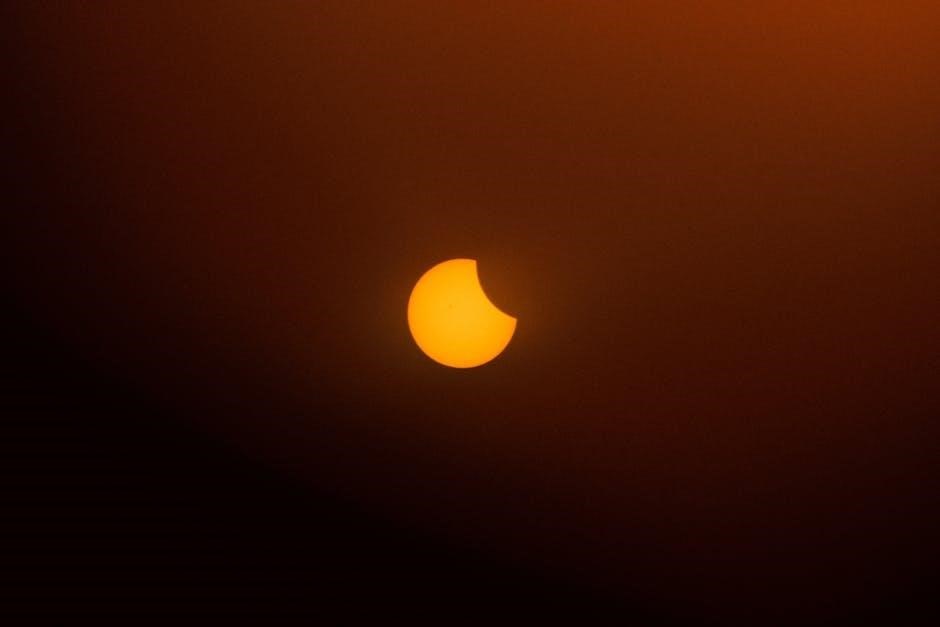
The 2024 solar eclipse’s path of totality will traverse a specific corridor across North America, offering a dramatically different viewing experience than areas experiencing a partial eclipse. Lesson plans should emphasize this distinction, explaining how the degree of coverage impacts what viewers observe. Resources from organizations like NEEF detail how different locations will experience the eclipse uniquely.
For schools not within the path of totality, utilizing NASA’s live stream is an excellent alternative, providing a real-time view of the total eclipse. Educators can supplement this with downloadable PDF resources to discuss the differences between total and partial eclipses, ensuring all students benefit from the learning opportunity, regardless of their geographic location. Planning a school viewing event, with proper safety measures, is also encouraged.
Safety First: Eclipse Viewing Guidelines
Prioritizing eye safety is paramount when teaching about the 2024 solar eclipse. Lesson plans must incorporate comprehensive guidelines on safe viewing practices. Direct solar viewing, even for a brief moment, can cause serious and permanent eye damage. Emphasize the absolute necessity of using ISO 12312-2 compliant eclipse viewing glasses or handheld solar viewers.
Free downloadable resources, like those offered by NEEF and McGraw Hill, often include safety information suitable for various age groups. Teach students never to look directly at the sun without proper eye protection. Discuss safe indirect viewing methods, such as pinhole projectors. A school viewing event requires strict supervision and adherence to these safety protocols to ensure a positive and safe learning experience.
Educational Resources for Different Grade Levels
Explore tailored lesson plans from NEEF and McGraw Hill, offering PDF resources designed for elementary, middle, and high school students’ comprehension.
Elementary School (Grades 3-5) Lesson Plans
Engage young learners with accessible resources designed to introduce the wonder of solar eclipses! The Addison Central School District’s Eclipse Learning Guide provides pre-teaching opportunities utilizing captivating podcasts and videos.
Activities focus on fostering social-emotional connections to the event, helping students process their excitement and curiosity. A key component involves a hands-on modeling activity, easily implemented at home or in the classroom, visually representing the relative distances between the Earth, Moon, and Sun during totality.
Downloadable PDF resources are available to support these lessons, making it simple for educators to integrate eclipse science into their curriculum. These materials aim to build foundational understanding in a fun and age-appropriate manner.
Modeling the Earth-Moon-Sun System
Visualize the celestial mechanics behind a solar eclipse with a hands-on modeling activity! The Addison Central School District’s Eclipse Learning Guide specifically highlights a model activity suitable for both home and classroom environments.
This activity allows students to physically represent the relative distances between the Earth, Moon, and Sun during the moment of totality, fostering a deeper understanding of the alignment required for an eclipse to occur.
Utilizing readily available materials, students can create a scaled representation, enhancing their spatial reasoning skills and solidifying their grasp of the Earth-Moon-Sun relationship. Downloadable resources and guides support educators in facilitating this impactful learning experience.
Social-Emotional Connections to the Eclipse
Beyond the scientific aspects, a solar eclipse presents a unique opportunity to explore social-emotional learning. The Addison Central School District’s Eclipse Learning Guide emphasizes incorporating activities that foster connection and shared experience.
Discussing the awe and wonder evoked by an eclipse can encourage students to reflect on their emotions and appreciate the beauty of the natural world. This shared experience can build community within the classroom.
Facilitate conversations about the collective anticipation and excitement surrounding the event, promoting empathy and understanding. Exploring these emotional responses alongside the scientific concepts creates a more holistic and memorable learning experience for all students.
Middle School Lesson Plans
The National Environmental Education Foundation (NEEF) provides five mini-lessons specifically designed for middle school students, available as downloadable PDF resources and Google Docs/Forms. These lessons delve into fundamental eclipse concepts.
Students will explore what a solar eclipse is, differentiating it from a lunar eclipse, and investigating the sun’s corona – its outer atmosphere. A key component examines how a solar eclipse impacts air temperature, fostering scientific inquiry.
Furthermore, the lessons address regional variations in the eclipse experience across the US, highlighting the diverse perspectives and observations possible. Each lesson is structured for approximately 30 minutes of instruction, offering a concise yet comprehensive learning module.
What is a Solar Eclipse? (Basic Concepts)
Introduce students to the fascinating phenomenon of a solar eclipse – a captivating alignment of the Sun, Moon, and Earth. The NEEF’s mini-lesson, available as a free PDF, explains how the Moon passes between the Sun and Earth, casting a shadow upon our planet.
This lesson clarifies that a solar eclipse occurs when the Moon completely or partially blocks the Sun’s light. Students will learn about the umbra (total darkness) and penumbra (partial shadow) regions, understanding why some observers experience totality while others see a partial eclipse.
The resource emphasizes the rarity of total solar eclipses at any given location, sparking curiosity and appreciation for this celestial event. It lays the groundwork for understanding more complex eclipse-related concepts.
Solar vs. Lunar Eclipses: Key Differences
Distinguish between solar and lunar eclipses using the NEEF’s dedicated mini-lesson, accessible as a free PDF download. This resource highlights that a solar eclipse happens when the Moon blocks the Sun’s light, while a lunar eclipse occurs when the Earth blocks the Sun’s light from reaching the Moon.
Students will grasp that solar eclipses can only occur during a new moon phase, and lunar eclipses during a full moon phase. The lesson clarifies why solar eclipses are more rare at a specific location than lunar eclipses, due to the smaller shadow cast by the Moon.
Furthermore, it explains the different types of solar eclipses (total, partial, annular) and lunar eclipses, fostering a comprehensive understanding of these celestial events.
The Sun’s Corona: Exploring the Outer Atmosphere
Delve into the Sun’s corona with a focused mini-lesson from the National Environmental Education Foundation (NEEF), available as a free PDF resource. This lesson explains that the corona is the outermost part of the Sun’s atmosphere, normally invisible due to the brighter photosphere.
Students will learn that the corona becomes visible during a total solar eclipse when the Moon blocks the Sun’s bright light, revealing its ethereal glow. The resource details the corona’s extreme temperatures – reaching millions of degrees Celsius – and its role in solar flares and coronal mass ejections.
Explore how scientists study the corona using specialized instruments, even when a total eclipse isn’t occurring, furthering understanding of our star.
High School Lesson Plans
Engage high school students with advanced explorations of the 2024 eclipse, utilizing free PDF resources from NEEF and McGraw Hill. Lessons focus on the impact of the eclipse on air temperature, examining how reduced sunlight affects atmospheric heating rates.
Students will investigate regional variations in the eclipse experience, analyzing factors like latitude, longitude, and cloud cover. They can explore data sets to compare eclipse characteristics across different locations in the US.
Further study delves into the science behind the corona and the eclipse’s effect on animal behavior, fostering critical thinking and scientific inquiry. These resources provide a comprehensive framework for in-depth eclipse study.
Impact of Solar Eclipses on Air Temperature
Explore how a solar eclipse dramatically reduces incoming solar radiation, leading to measurable drops in air temperature. NEEF’s free PDF resources provide a lesson focusing on this phenomenon, perfect for high school students.
Students can investigate the rate of temperature change during totality, comparing it to typical diurnal variations. Data collection and analysis become central to understanding the eclipse’s thermal impact.
Activities might include predicting temperature drops based on eclipse magnitude and duration, or analyzing real-time temperature data collected during the 2024 event. This lesson fosters scientific reasoning and data interpretation skills.
Regional Variations in Eclipse Experience
Investigate how the 2024 eclipse presents vastly different experiences depending on location. NEEF’s resources highlight this, showing how areas within the path of totality experience complete darkness, while others see only a partial eclipse.
Students can map the path of totality and partial shadows, analyzing the percentage of solar coverage at different cities. This activity reinforces geographical skills and understanding of eclipse geometry.
Lessons can incorporate comparing eclipse durations and magnitudes across various locations, prompting discussions about why these variations occur. Analyzing regional reports and observations adds a real-world dimension to the learning experience.
Free Downloadable Resources
Access free PDF lesson plans and student handouts from NEEF, McGraw Hill Inspire Science, and NASA, simplifying eclipse integration into your curriculum.
National Environmental Education Foundation (NEEF) Resources
The National Environmental Education Foundation (NEEF) provides five engaging mini-lessons specifically designed for middle school students, all freely accessible as PDF documents. These resources delve into crucial eclipse-related topics, including a foundational understanding of what a solar eclipse is, and a clear differentiation between solar and lunar eclipses.
Furthermore, students can explore the sun’s corona – its outer atmosphere – and investigate how a solar eclipse impacts air temperature. A particularly valuable aspect of these lessons is their focus on regional variations; students will learn how the eclipse experience differs across various locations within the United States.
Each lesson is structured to be completed within approximately 30 minutes, and includes both a comprehensive PDF resource document for teachers and a convenient Google Doc/Google Form student handout for easy assessment and participation.
McGraw Hill Inspire Science Resources
McGraw Hill offers a suite of free resources, integrated with their K-12 science program, Inspire Science, to simplify lesson planning for educators. These materials are thoughtfully scaffolded to cater to both primary and intermediate learners, ensuring accessibility for a wide range of students.
A key component of these resources is a kid-friendly animation specifically created to explain the 2024 total solar eclipse in an engaging and understandable manner. This visual aid is perfect for introducing the concept to younger learners and sparking their curiosity.
Teachers can readily incorporate these materials into their existing curriculum, utilizing the PDF-based resources to enhance their eclipse lessons and provide students with a comprehensive learning experience.
NASA Live Stream Integration for Classrooms
For schools not located within the path of totality or even partial eclipse visibility, NASA provides an invaluable alternative: a live stream of the event. This allows students everywhere to experience the eclipse firsthand, even without direct observation.
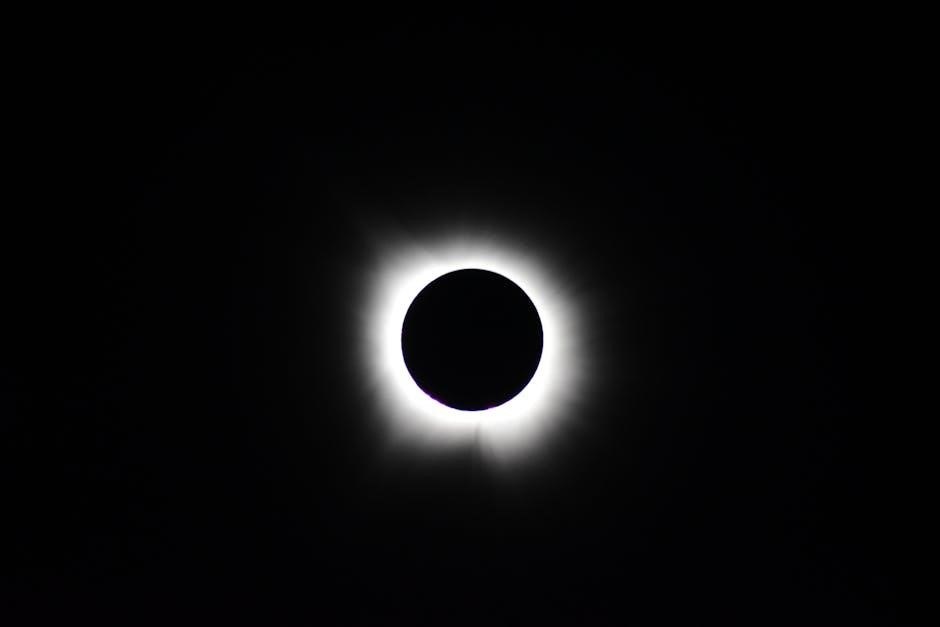
Integrating the NASA live stream into lesson plans offers a dynamic and engaging learning opportunity, supplementing pre-taught concepts and providing a real-time visual spectacle. Teachers can utilize this resource to discuss the eclipse as it unfolds, answering student questions and fostering a sense of shared experience.
Combined with downloadable PDF resources from organizations like NEEF, the NASA live stream creates a comprehensive and accessible eclipse learning experience for all students.
Activities & Engagement
Boost learning with school viewing events, podcasts, videos, and downloadable PDF guides – fostering excitement and understanding of the 2024 eclipse!
Organizing a School Viewing Event
Planning a school-wide viewing event for the 2024 solar eclipse offers a fantastic hands-on learning experience. Prioritize safety by ensuring all students and staff have access to proper ISO 12312-2 compliant eclipse viewing glasses. Distribute these well in advance and educate everyone on their correct usage – never look directly at the sun without them!
Supplement the viewing with pre-event lessons utilizing free PDF resources from organizations like the National Environmental Education Foundation (NEEF) and McGraw Hill’s Inspire Science. These materials provide background information on eclipse science and safety protocols. Consider setting up multiple viewing stations to minimize crowding and enhance supervision. A live stream from NASA can be a valuable backup for schools not in the path of totality or experiencing inclement weather, ensuring all students can participate.
Utilizing Podcasts and Videos for Pre-Teaching
Enhance student understanding before the eclipse with engaging multimedia resources. The Addison Central School District’s Eclipse Learning Guide specifically recommends podcasts and videos as effective pre-teaching tools. These resources can introduce complex concepts in an accessible format, building anticipation and foundational knowledge.
Complement these with free PDF lesson plans from NEEF and McGraw Hill, which often suggest video integration. Look for kid-friendly animations explaining the eclipse phenomenon – McGraw Hill’s Inspire Science program offers such content. Podcasts can cover topics like the science behind eclipses, safety guidelines, and the historical significance of these events. Pre-teaching ensures students are prepared to observe and learn during the actual eclipse, maximizing the educational impact.
Solar Energy and its Connection to the Eclipse
Explore the fascinating link between solar eclipses and solar energy! The Addison Central School District’s Eclipse Learning Guide highlights that solar eclipses demonstrate the power and source of solar radiation. Discuss how the sun’s energy drives weather patterns, photosynthesis, and ultimately, life on Earth.
Utilize free PDF resources from organizations like NEEF and McGraw Hill to build lessons around this connection. Investigate how a sudden reduction in sunlight during totality impacts temperature and energy production. Consider activities where students model the sun’s energy output and observe its temporary decrease during an eclipse. This provides a tangible demonstration of solar energy’s importance and the eclipse’s dramatic effect.
Additional Considerations
Ensure lessons are adaptable for all learners, including those with disabilities, and accessible for remote learning environments using available PDF guides.
Accessibility for Students with Disabilities
Prioritize inclusive learning by adapting eclipse resources for diverse needs. Offer audio descriptions of visuals found within PDF lesson plans, ensuring students with visual impairments can fully participate. Provide tactile models representing the Earth-Moon-Sun system for kinesthetic learners and those with visual challenges.
Simplify language in handouts and instructions, catering to students with learning differences. Utilize larger font sizes and high contrast color schemes in PDF documents for improved readability. Consider providing alternative formats, such as braille or digital text-to-speech options.
Encourage collaborative activities that allow students to contribute based on their strengths. Ensure any viewing events are physically accessible and offer quiet spaces for students who may be sensitive to sensory stimuli. Remember, equitable access enhances the learning experience for everyone!
Adapting Lessons for Remote Learning
Leverage digital resources! Utilize the freely available PDF lesson plans from NEEF and McGraw Hill, easily shared via learning management systems. Integrate NASA’s live stream for a shared viewing experience, fostering a sense of community despite distance.
Transform hands-on activities into virtual simulations or at-home projects using readily available materials. Encourage students to create models of the eclipse using household items and share their creations online. Facilitate discussions through virtual forums or video conferencing.
Break down complex concepts into smaller, digestible segments delivered through interactive presentations or videos. Ensure all materials are accessible on various devices and offer technical support to students who may need assistance. Remote learning offers a unique opportunity for independent exploration!